TITAY, ZAMBOANGA SIBUGAY — In a major step forward for technological integration in region-based schooling, the Global Academy Institute of Technology Foundation (GAITF) has officially initiated its transition toward an Education 6.0 framework.
By deploying a synchronized dual-engine server architecture—combining a cloud-based Virtual Private Server (VPS) with a specialized, high-performance Local Area Network (LAN) Server—GAITF is rewriting the parameters of instructional delivery, campus operations, and technical training.
Defining Education 6.0 at GAITF
While earlier educational models focused on digitization and basic online access, Education 6.0 emphasizes an immersive, hyper-connected, and completely decentralized learning ecosystem. It bridges the gap between physical classrooms and cloud environments, ensuring that digital learning assets are ubiquitous, secure, and resilient against external connectivity failures.
At GAITF, this manifests as a hybrid network topology designed to support continuous, high-throughput access to institutional applications for both students and faculty members.
The Dual-Engine Infrastructure: Hybridizing Cloud and Campus
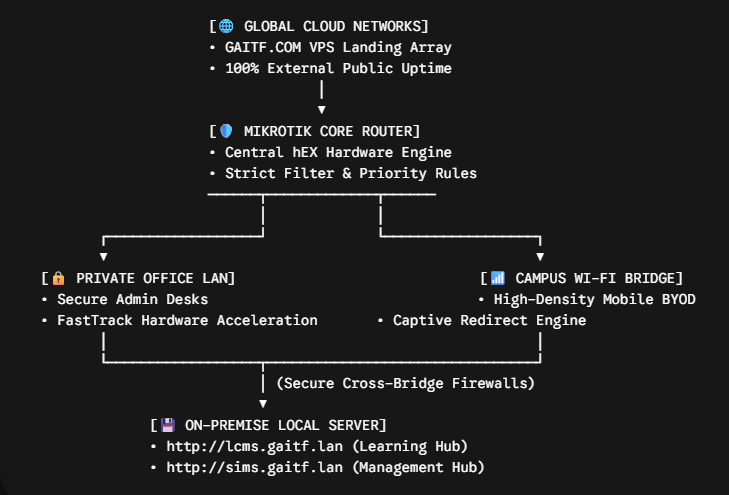
To eliminate single points of failure and deliver low-latency web experiences, the GAITF IT infrastructure has been segmented into two collaborative environments managed directly through specialized hardware switching and routing engines.
1. The Cloud Engine (Virtual Private Server)
The external VPS framework handles GAITF’s global public footprint, hosting public-facing resources and landing applications. It ensures that stakeholders, remote learners, and partner communities can interface with institutional assets globally, maintaining uninterrupted public uptime.
2. The Campus Engine (Local Area Network Server)
To protect the internal student body from bandwidth bottlenecks, GAITF has deployed an on-premise high-speed enterprise LAN Server. This server operates natively inside the campus network layout and hosts critical operational platforms:
- GAITF Learning Management System (LCMS): Accessible internally via
http://lcms.gaitf.lan, allowing thousands of simultaneous campus users to pull media-rich modules, stream video lectures, and complete assessments directly from the local solid-state arrays without consuming external internet bandwidth. - GAITF Management Information System (SIMS): Located at
http://sims.gaitf.lan, providing students and registrars with rapid access to academic profiling, grading sheets, and enrollment data over local data lanes.
Bridging Internet and Intranet in Learning Delivery
This architectural design creates a unique environment where Internet (External Web) and Intranet (Internal LAN) work together seamlessly.
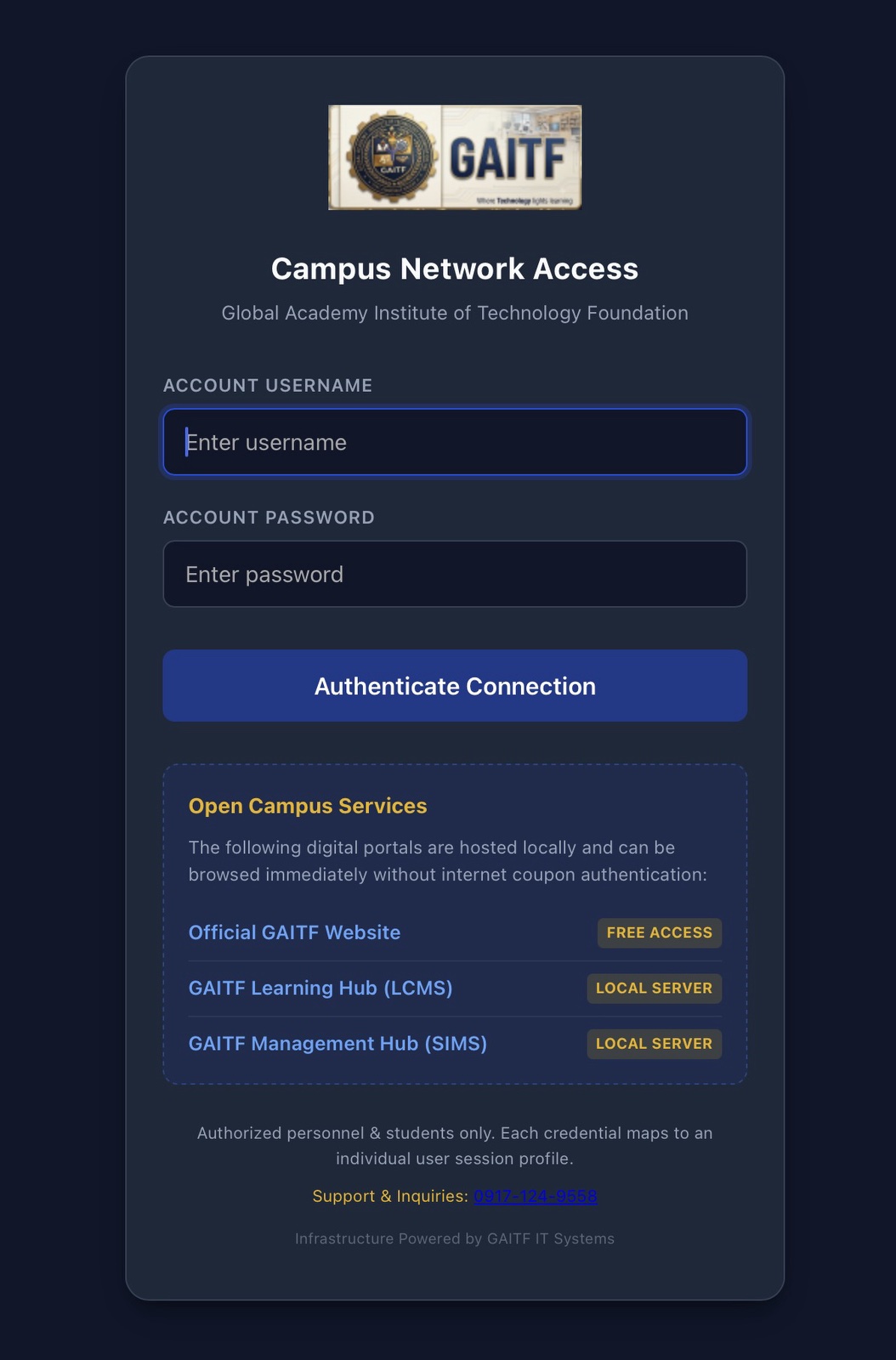
Through customized firewall routing and bridge domain separation implemented on the central MikroTik routing matrix, GAITF has established an Open Campus Services configuration. When students and faculty link their smartphones, tablets, or laptops to the campus Wi-Fi network, they enter a structured gateway environment:
- Unauthenticated Open Access: Even before logging into a public internet voucher session, the router’s firewall safely redirects and permits immediate, free-of-charge cross-bridge access to local server nodes. Students can browse the official website (
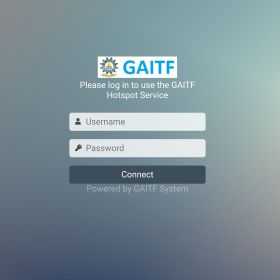
https://gaitf.com), interact with the LCMS portal, or check requirements on the SIMS platform completely overhead-free. - Captive Portal Internet Gateways: When users require external research pipelines, the network seamlessly transitions them through a streamlined, mobile-optimized authentication interface, granting throttled, high-speed public internet capabilities while protecting local server performance from degradation.
Transformative Impacts on Training and Modality
The transition to an Education 6.0 infrastructure directly upgrades GAITF’s training and instructional delivery systems:
- Zero-Lag Blended Modalities: Instructors can build hybrid lessons that pull global web data alongside heavy local database assets simultaneously, eliminating the classic “network timeout” issues common in high-density campus deployments.
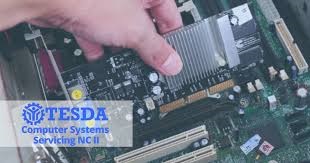
- Real-World IT and Systems Training: For students pursuing tracks in information technology and computer systems servicing, the GAITF infrastructure serves as a live, enterprise-grade laboratory. Students gain direct exposure to state-of-the-art networking concepts—including firewall filter ordering, network address translation (NAT) loopbacks, automated DNS table configurations, and hardware-accelerated FastTrack routing.
- Resource Resilience: By localized hosting of core database engines, learning delivery remains functional during external fiber link drops or inclement weather scenarios. The school’s internal digital ecosystem continues running locally, ensuring training schedules remain on track.
Through this structural modernization, GAITF is proving that rural educational institutions can deploy highly sophisticated, secure, and accelerated network environments—truly demonstrating how technology drives learning.